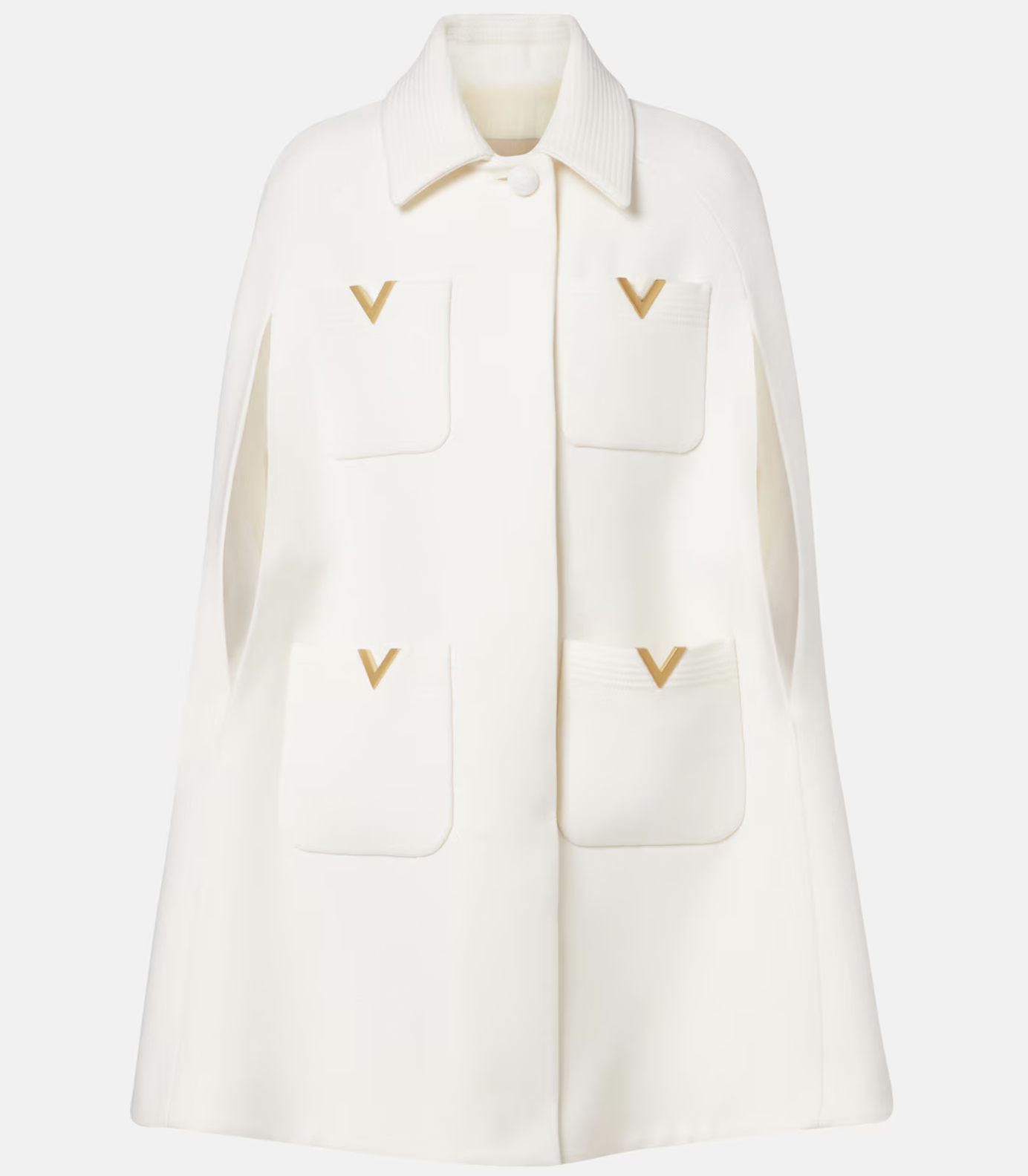
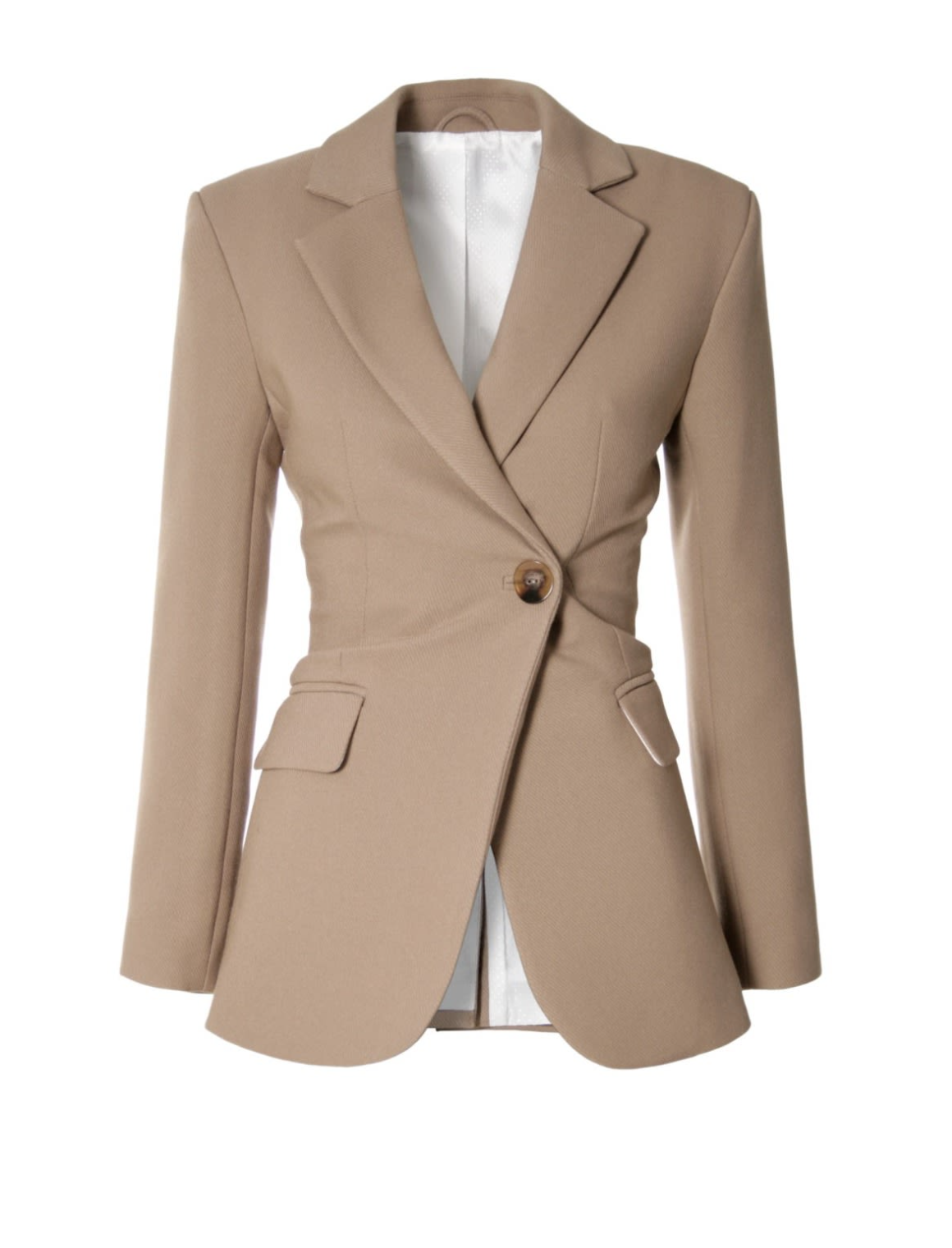
Cape Dear
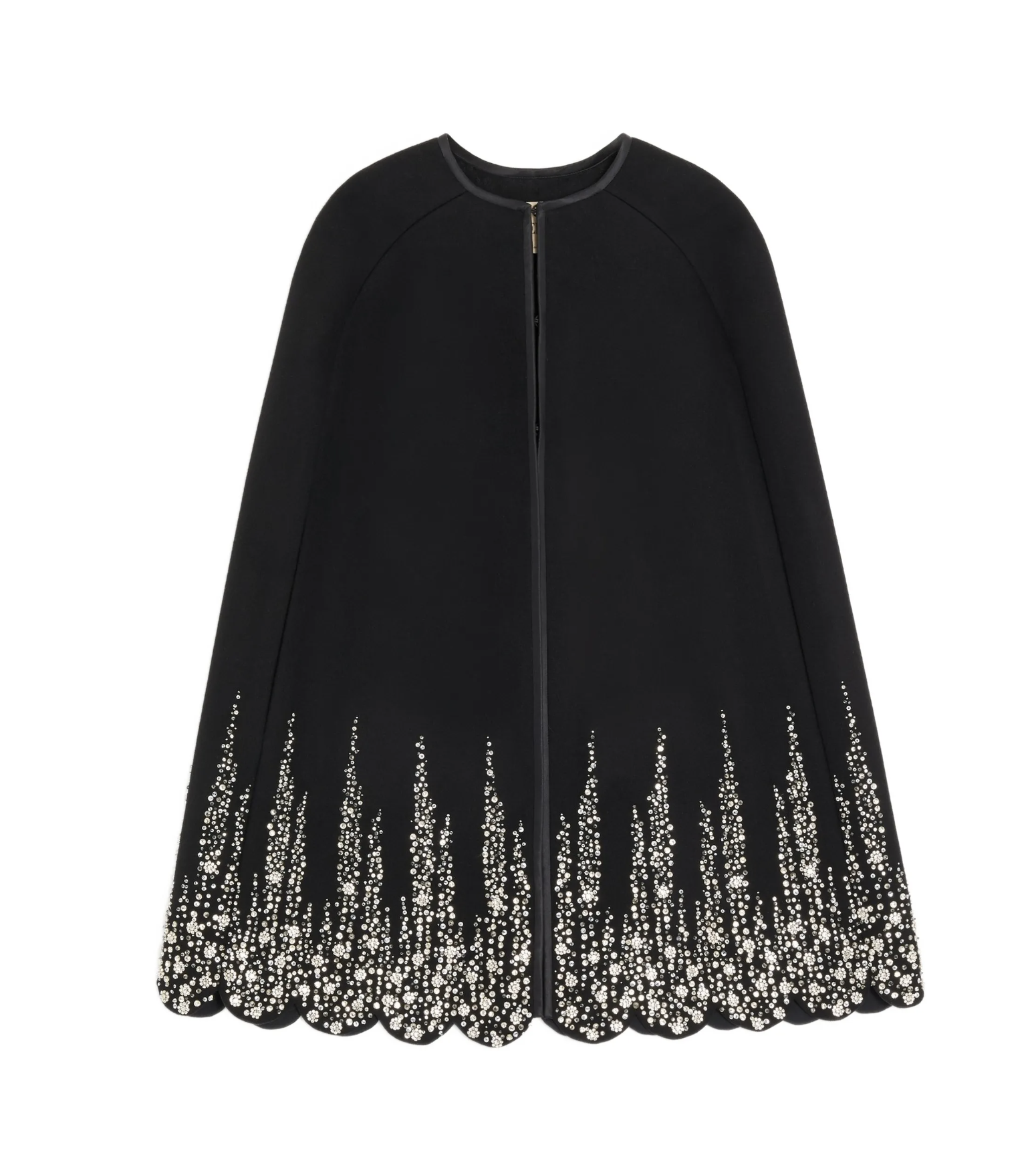
The film flopped, but Jane Fonda's wardrobe in Rollover didn't get the memo. Forty years on, we still can't get enough of her. This is over-the-shoulder boss dressing at its sharpest.
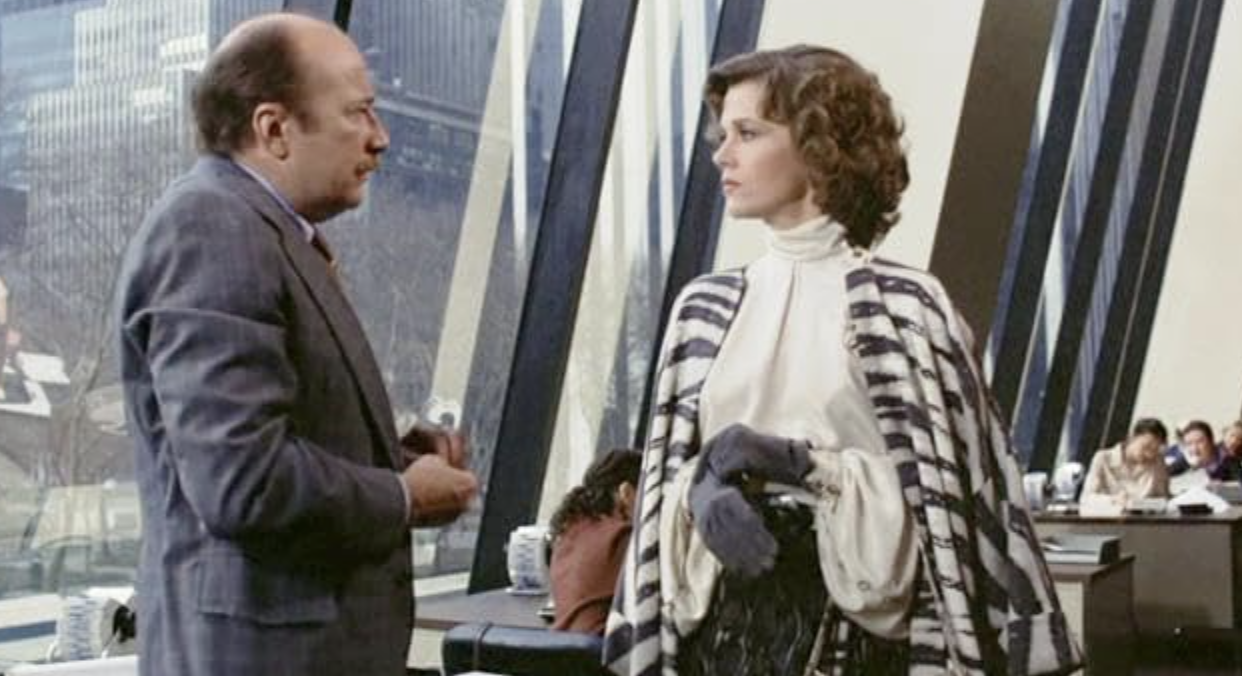
Jane Fonda stars in Rollover (Rollover (1981), IPC Films / Orion Pictures / Warner Bros). Forty-plus years later and this entrance still teaches a masterclass in timeless style.
There is a dangerous myth still circulating in modern boardrooms and brand decks: that ambition peaks at 39, and that executive dressing must follow a template of rigid, desexualised conformity to be taken seriously.
For decades, women climbing the corporate ladder have been handed a uniform that mimics masculinity: heavy shoulder pads, boxy blazers, and corporate armour designed to help them blend into a man’s world. But if you want to see what absolute ownership, wisdom, and expensive restraint actually look like, you have to travel back to 1981. When the financial thriller Rollover premiered in December 1981, it flopped spectacularly. The plot—a convoluted web of Arab oil money, banking conspiracies, and global economic collapse—bored audiences to tears. Jane Fonda herself later joked that "about two people saw the film." Yet, while cinema history entirely forgot the movie, fashion insiders never forgot the wardrobe.
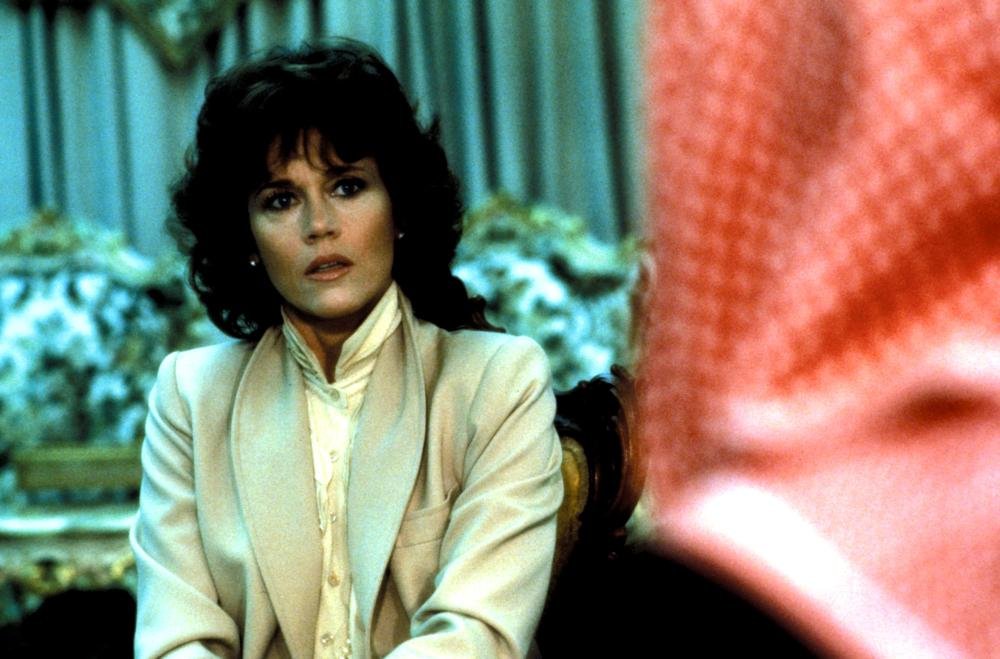
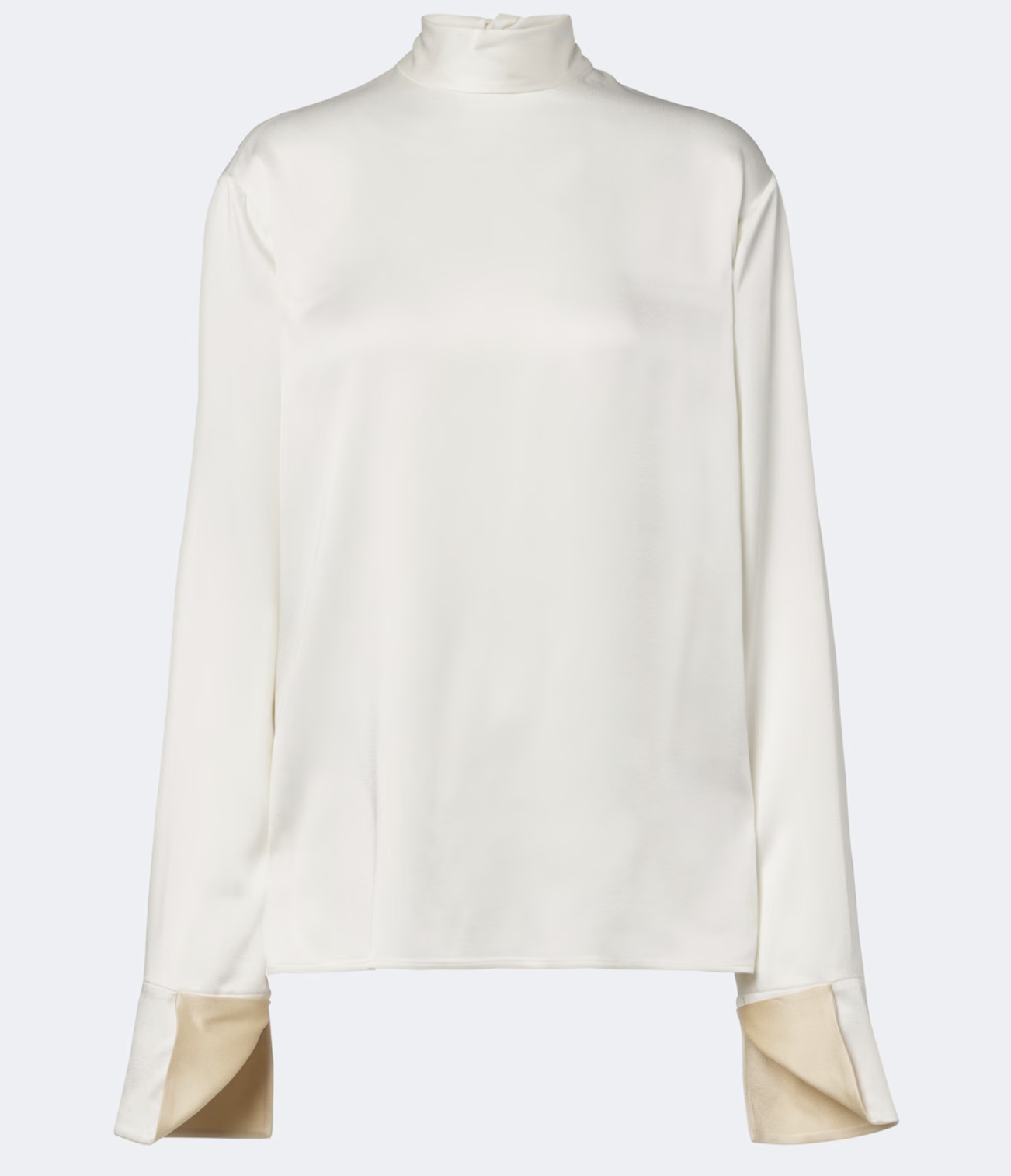
Fonda in caramel: a shawl-lapel blazer and a high-necked shirt, and suddenly power dressing has a colour palette.
Fonda played Lee Winters, a glamorous, sharp-witted former actress and wealthy widow who suddenly finds herself thrust into the presidency of her late husband’s petrochemical company. To dress a woman who wasn't just entering the boardroom, but owning it, Fonda turned to the legendary, Oscar-winning costume designer Ann Roth (who had previously crafted Fonda’s iconic, razor-sharp look in Klute).
What Roth created for Rollover was a masterclass in executive elegance that bypassed the aggressive caricature of 1980s power dressing entirely. There were no neon hues, no aggressive, football-player shoulder pads, and no cheap gimmicks.
Instead, Roth weaponised quiet luxury forty years before the internet invented the phrase.
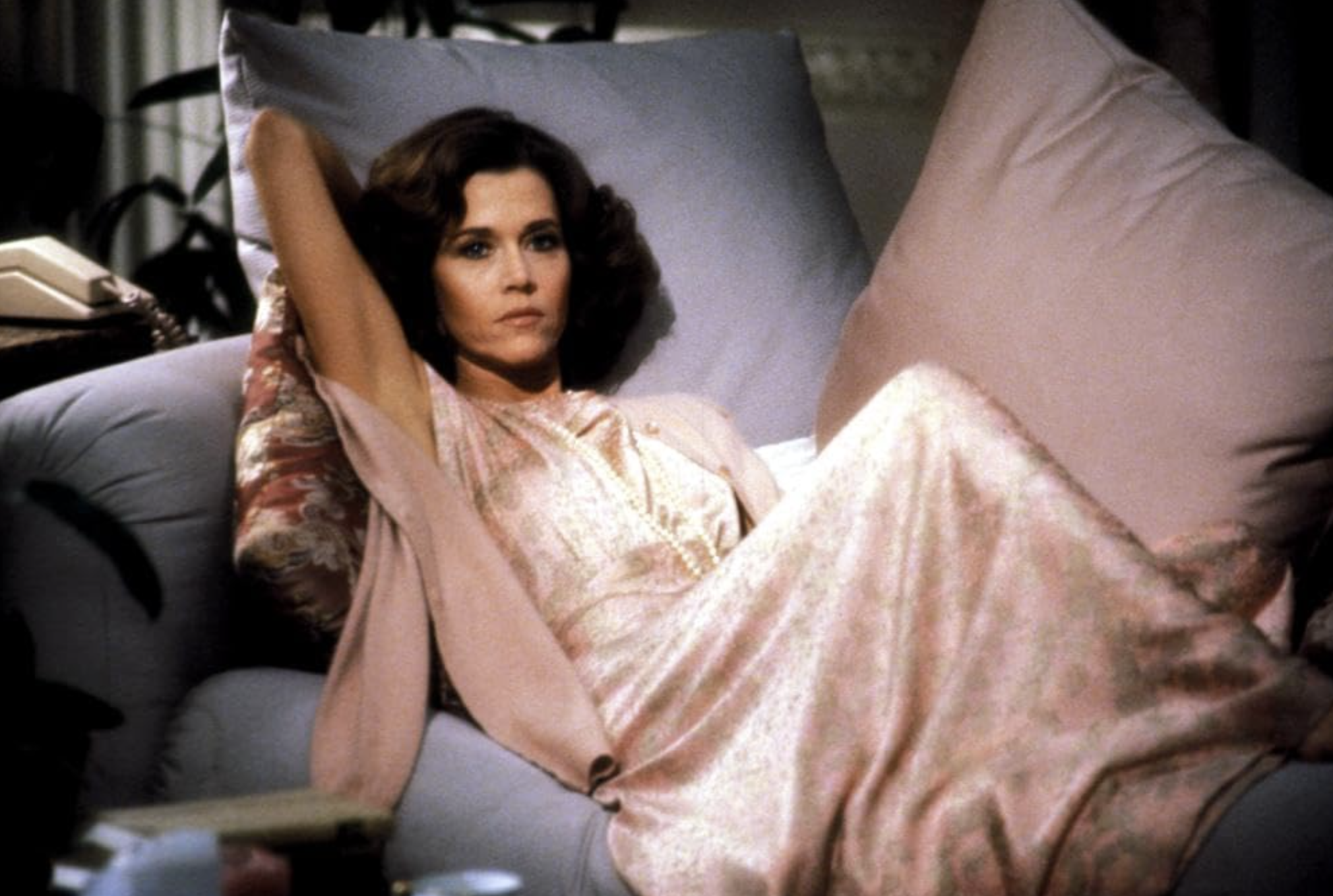
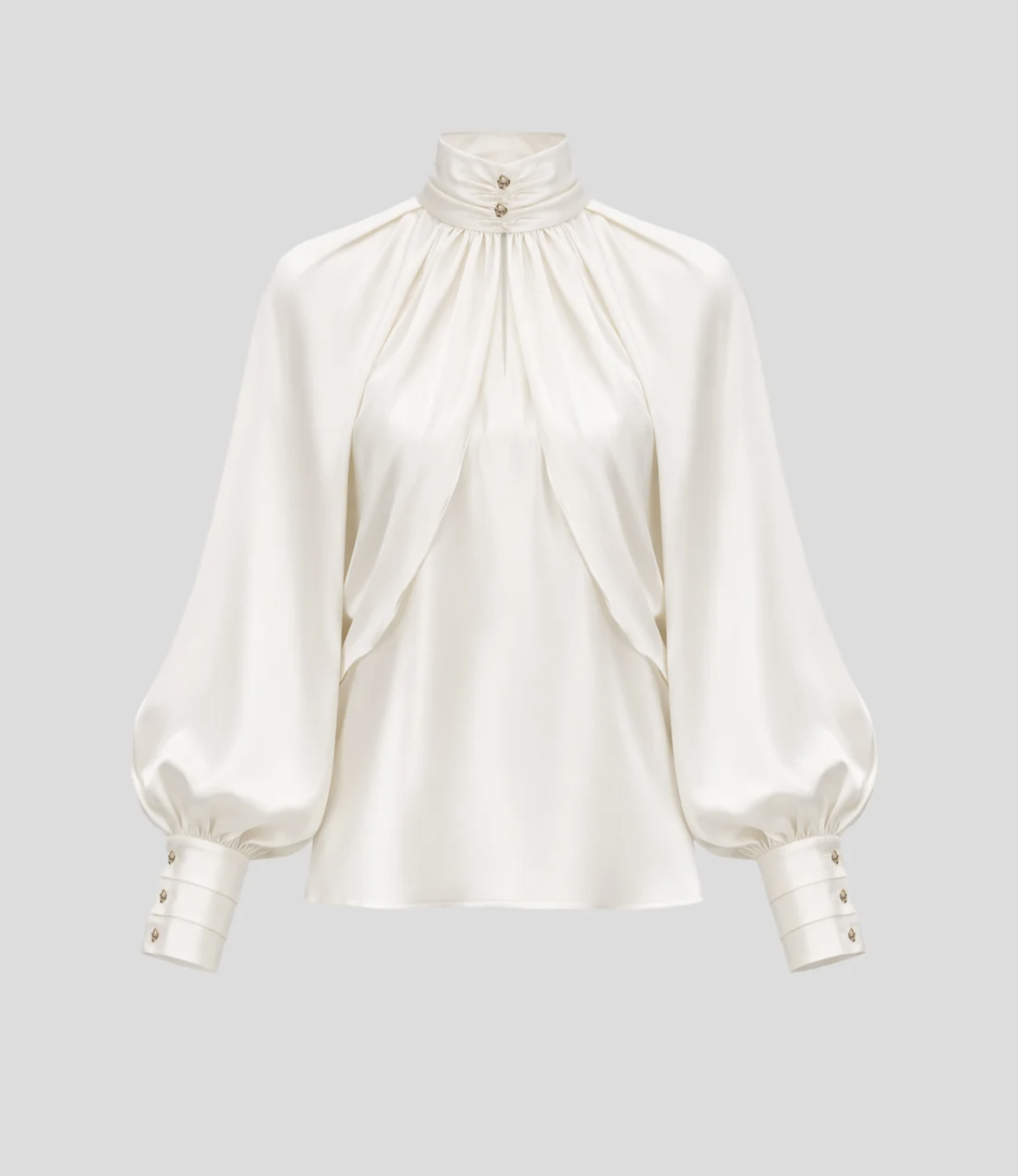
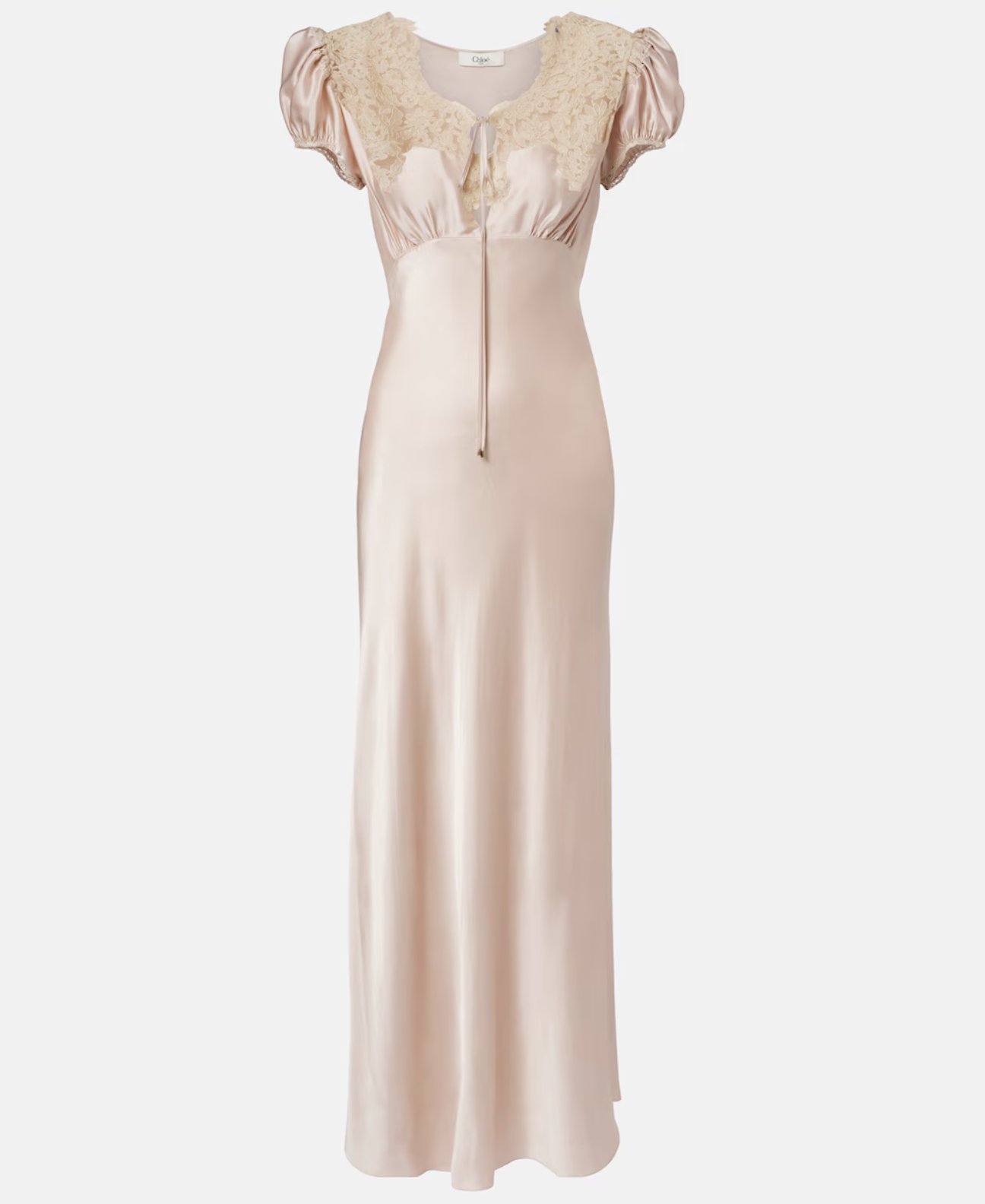
Pale satin, languid proportions and the kind of glamour that only gets better with age.
Roth leaned heavily into ultra-tailored, monochromatic minimalism. Fonda glides through Manhattan high-finance wrapped in seamless columns of cream, taupe, and rich ivory. By sticking to a strict tonal palette, the visual impact is one of calm, unshakeable authority. Roth rejected the stiff, restrictive blazers of the era. Instead, Fonda’s executive uniform consisted of fluid silk wrap dresses, unstructured matching boleros, and draped fabrics that moved with purpose. It proved a vital style philosophy that Agency Edits has always championed: softness and structural precision are not mutually exclusive. True power lies in ease of movement.
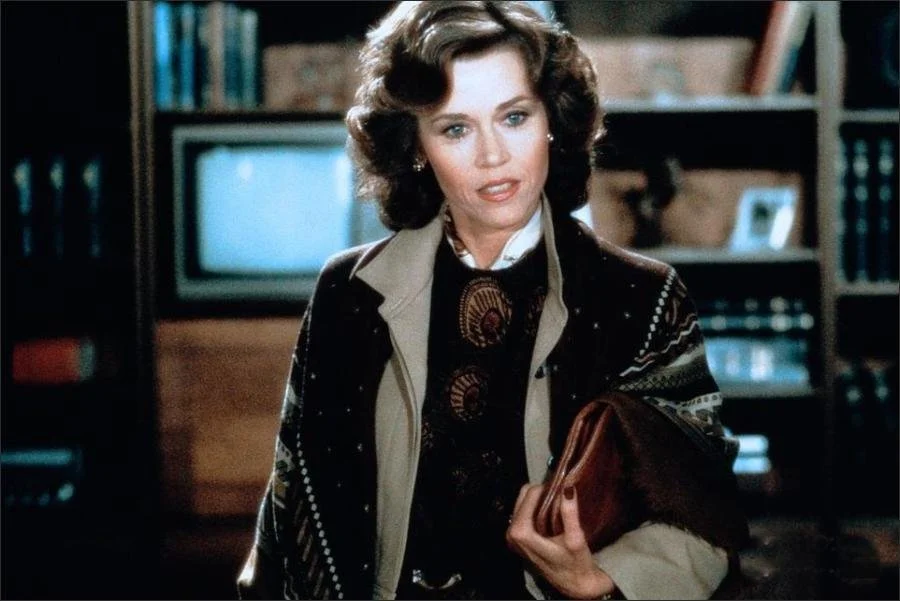
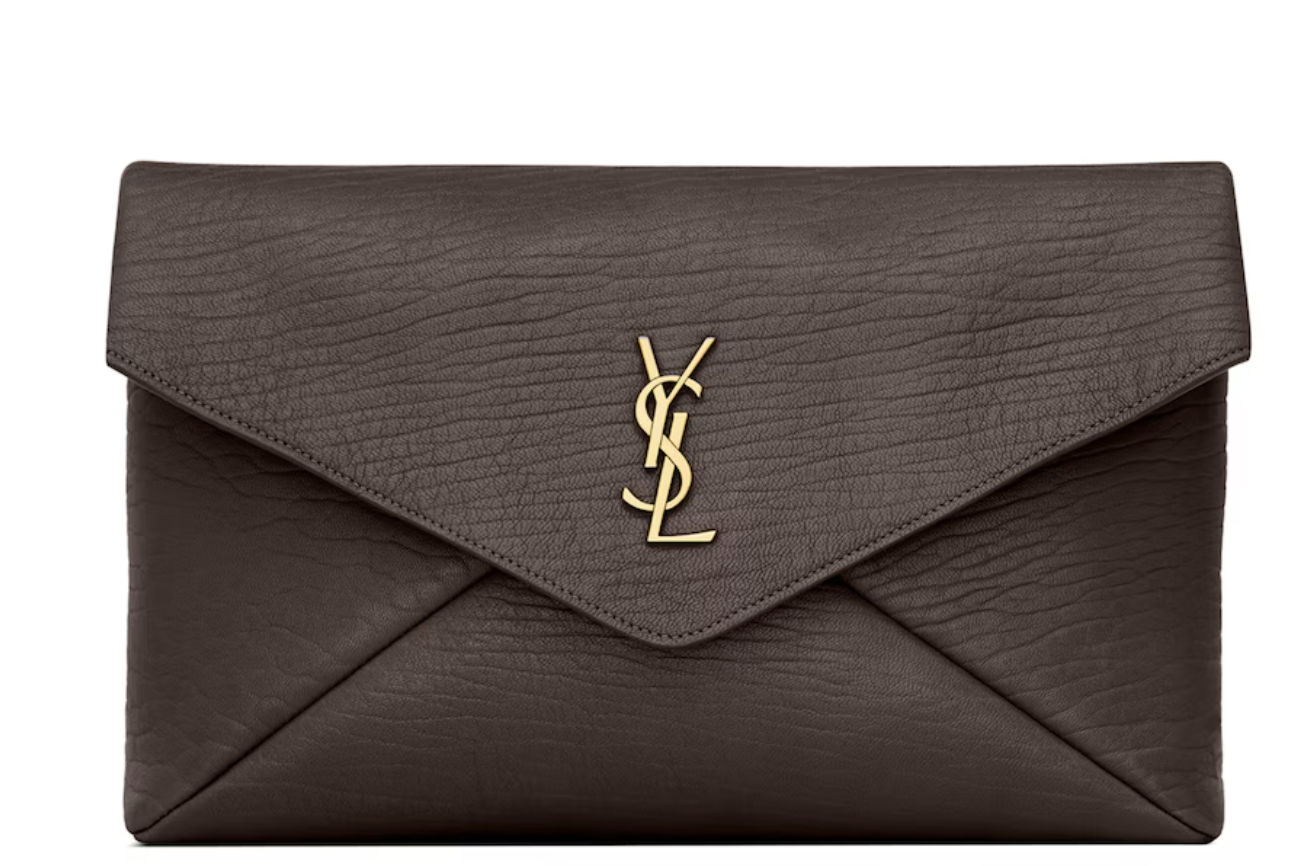
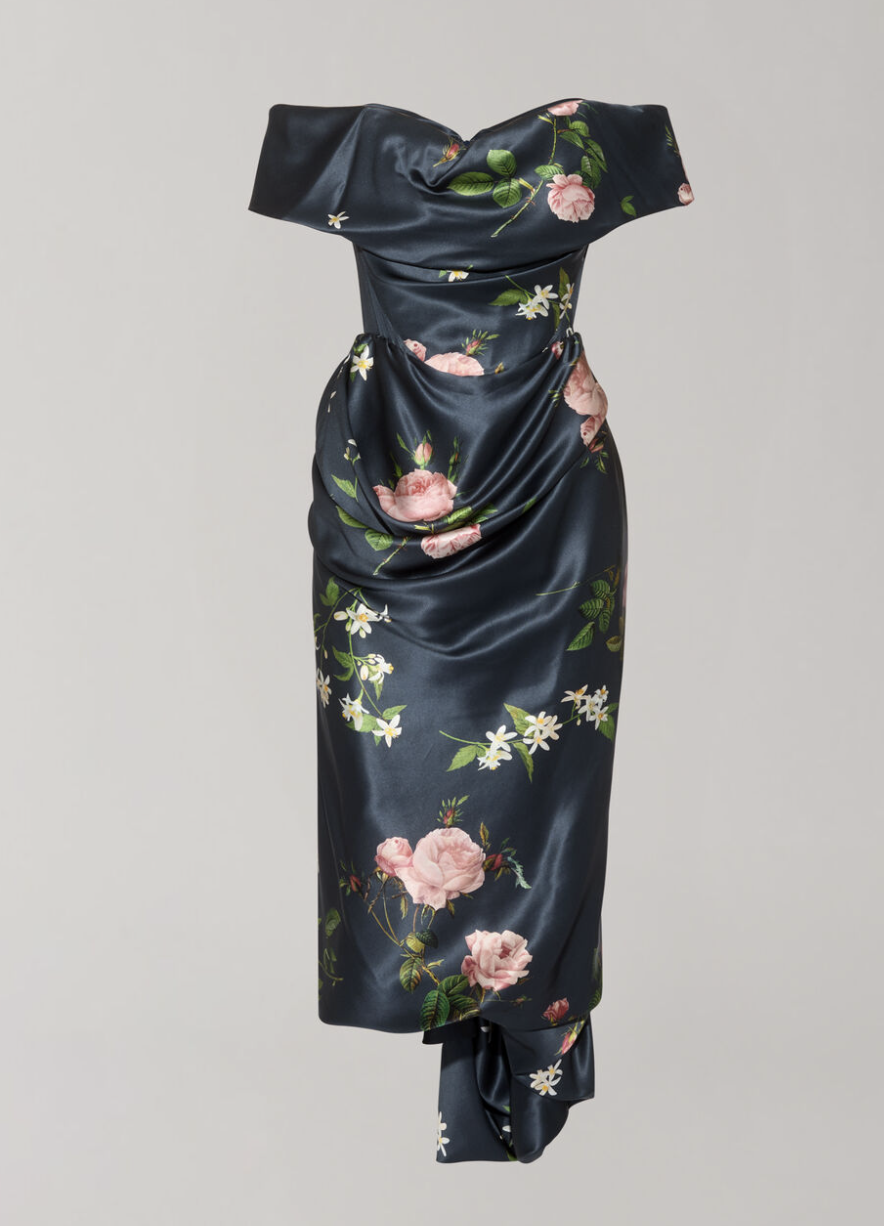
The blueprint for autumn 2026: layered tailoring, print, an oversized clutch.
For the mature woman navigating the modern enterprise, Rollover offers a crucial lesson in textile intelligence. When color is neutral, fabric must do the heavy lifting.
Throughout the film, Fonda’s commanding presence is amplified by the sheer quality of her textures. Heavy, luminous silks; unstructured wool coats that drape effortlessly over the shoulders; and impeccably structured, geometric leather bags devoid of loud, distracting logos. It is an aesthetic anchored entirely in high-value, intelligent investment pieces.
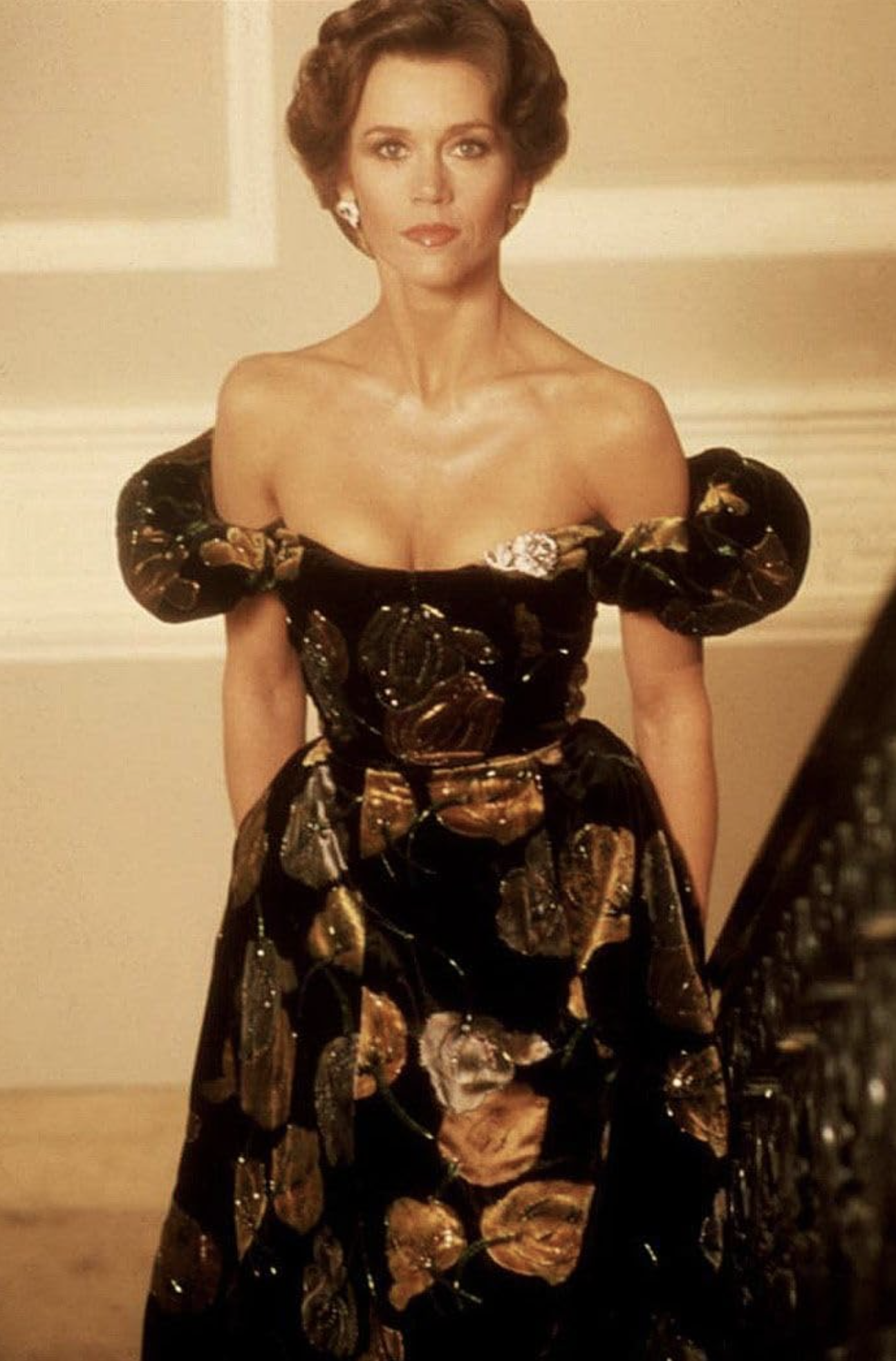
When evening dresses actually looked like evening dresses.
Jane Fonda in Rollover (1981). Costume design by Ann Roth.
The ultimate testament to the genius of the Rollover wardrobe isn't just how sublime it looked on screen in 1981, but how it functioned in real life. Fonda was so entirely obsessed with the pieces Ann Roth created for her that she legally negotiated to keep the entire wardrobe after filming wrapped. And she didn't just store them in tissue paper. Fonda wore these exact corporate costumes as her personal armour for decades.
When she married media tycoon Ted Turner a decade later in 1991, she skipped the traditional bridal boutique and walked down the aisle in the floor-length, high-neck white lace gown Ann Roth had designed for Rollover. A few years later, in 1994, she attended a high-profile White House state dinner hosted by Bill Clinton wearing a dazzling, sequined black velvet gown from the movie. That is the definition of a victory lap for high-investment style. It proves that when garments are built on a foundation of flawless tailoring, exceptional fabric, and minimalist restraint, their relevance never narrows with time.
As a new era of enterprise embraces the 50-plus female founder, we don't need to reinvent the wheel of power dressing. We just need to remember the lessons of Lee Winters: dress with fluid precision, invest in textural wealth, and never be afraid to dominate the room.
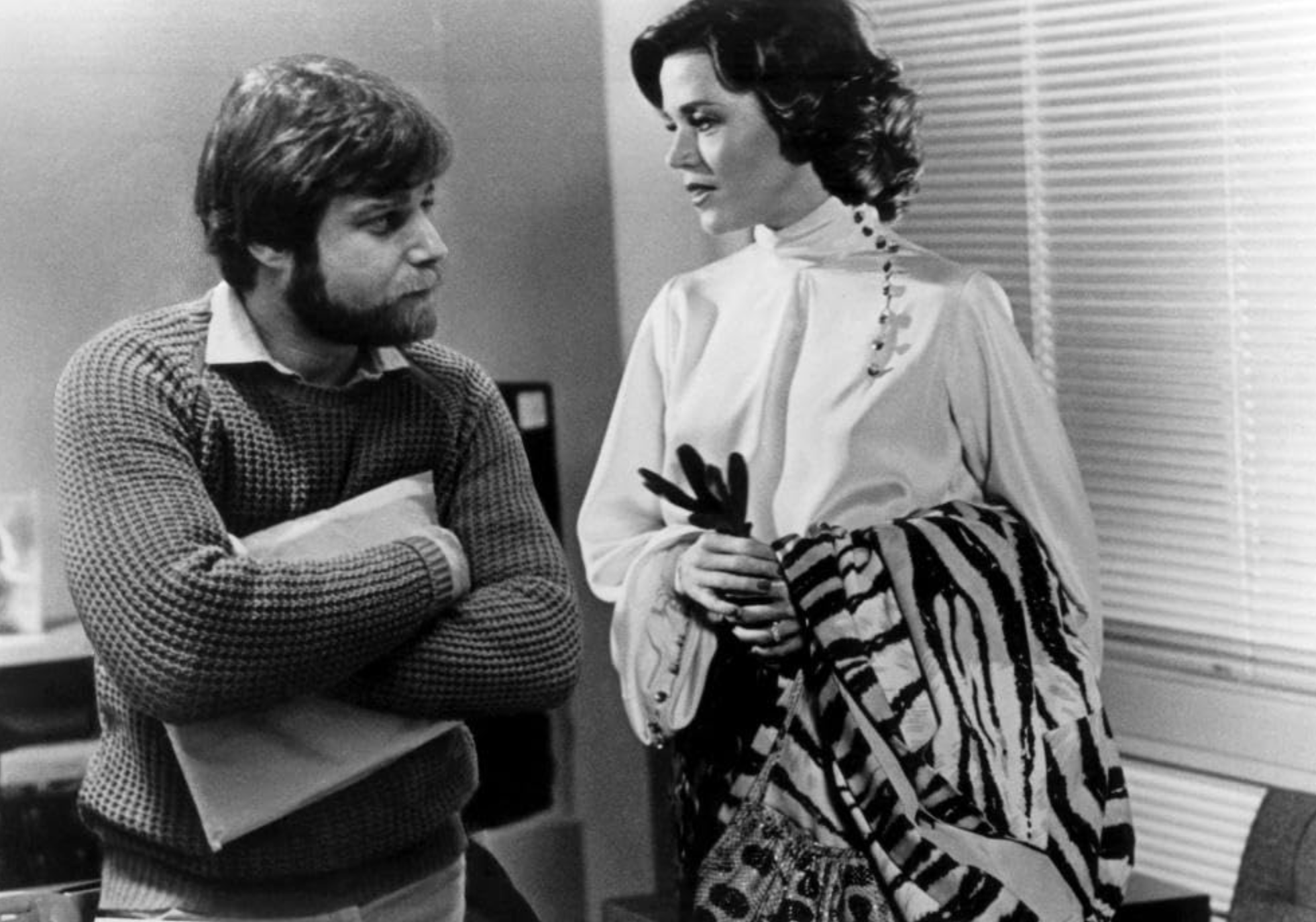
Behind the scenes: Jane Fonda, Rollover, 1981.